When Tim first came to see us in June, he’d been suffering with shoulder pain for more than 6 weeks. It had begun after a jiu-jitsu training session and although it had come and gone since then, every time he tried to go back to physical activity it would return. He wanted to get back to doing calisthenics and doing BJJ, activities that he was training to compete in, but whenever he did pullups the pain would get particularly bad. He wasn’t confident training in BJJ, and was very nervous about movements that put the shoulder in an awkward position.
At that initial assessment, it was clear that there was pain and weakness with specific movements. The symptoms and testing suggested a rotator cuff tendon problem. Tendons can be tricky to treat. Rest on its own often doesn’t give active people the recovery they’re hoping for: although the pain might temporarily improve, it often comes back when they return to their usual activities. Tendons benefit from loading – but with these sorts of conditions, it can be easy to push too hard and cause a flare up.
Finding the goldilocks zone
The art of rehab lies in finding the right exercises and crucially the right dose and progression for each individual. We also need to think about the loads that person will be putting on their tendons in their regular activities, and figure out a plan that will get them back to being able to do that one step at a time. If someone is doing a sport which requires a lot of heavy, fast, sometimes unpredictable loading of a joint in awkward positions – we’re going to need to come up with something more challenging than that bit of red theraband you might have been given previously!
Over the course of four months, and six treatment sessions, we gradually got Tim out of pain and back to training. He worked hard on the rehab each time, and after a few months was confident enough to start progressing his calisthenics training, learning new movements and going back to full sparring at jiu-jitsu. At our last session, he told me that the shoulder we’d been working on now felt just as strong, if not stronger, than his other shoulder.
Following up
We recently had the opportunity to get Tim in for an ultrasound of the shoulder. We know there isn’t a perfect correspondence between what we might see on a scan and how it feels to the patient, and I’m a big believer in making sure that we treat the person rather than the scan. Sometimes, though, it can be helpful as part of the overall picture. In this case, I was able to reassure Tim that there were no concerns about the structure of the shoulder, and give him the green light to continue with his activities as normal.
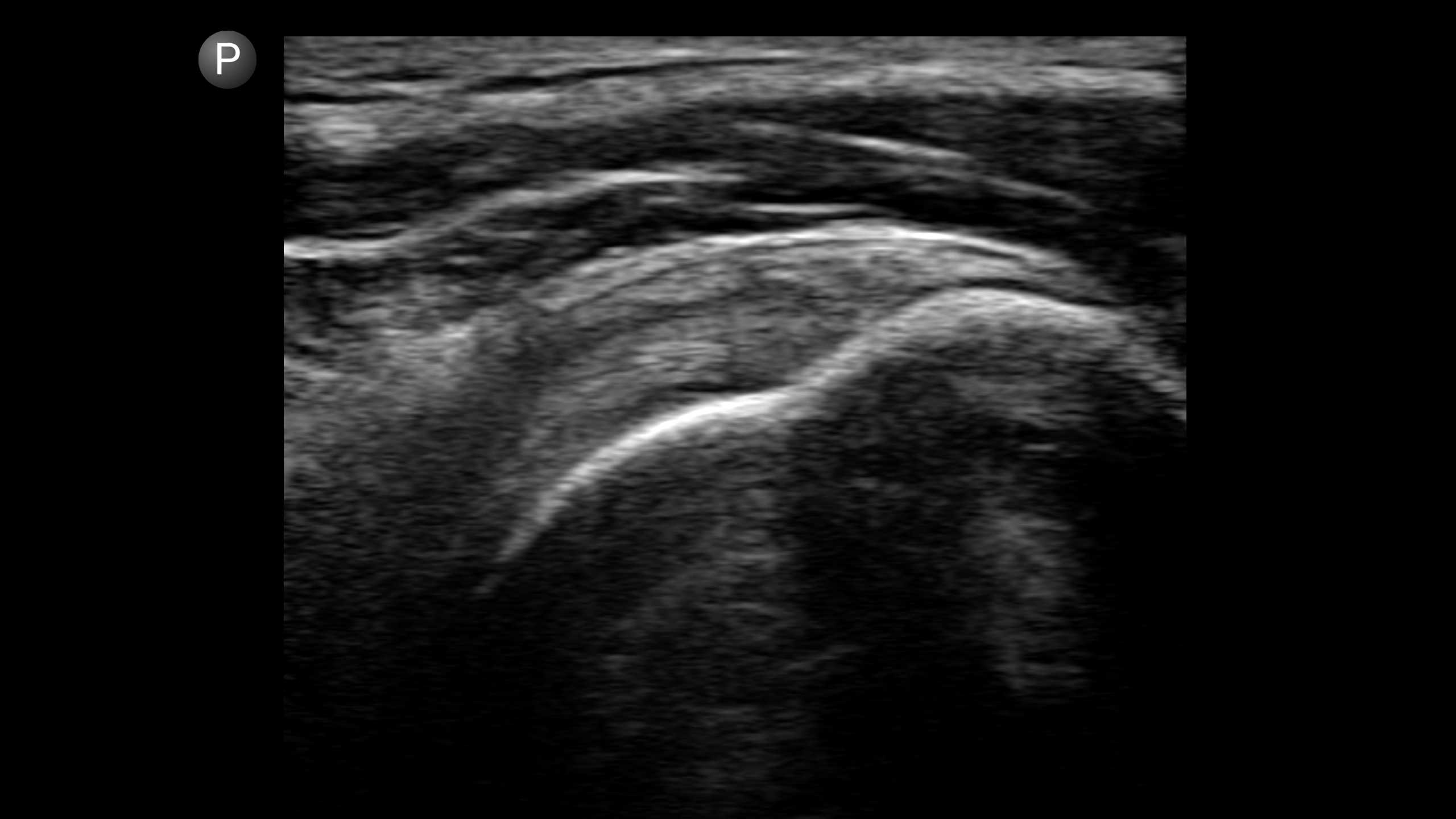
Although the shoulder pain is no longer a limiting factor, he’s continuing to include some extra shoulder work. We know that tendons can take time to respond to training, and that it’s important to progress at the right pace to avoid another overload injury. Every few months we’ll change the exercises up to keep them relevant to his current level of strength, his training and his goals.
If you have an injury that’s stopping you from doing the things you love, why not book an appointment and find out how we can help you?